

July 6, 2026 · 9 min read · Updated July 30, 2026
Written by Nirav Kalola , CEO @ Kode Creators
10 Healthcare Software Development Trends to Watch in 2026
Global digital health spending will cross $700 billion by 2026, but here’s what that number hides: hospitals aren’t buying software anymore – they’re buying survival tools. The difference between thriving and bankruptcy increasingly depends on whether your EHR predicts readmissions, your supply chain anticipates shortages, and your scheduling system prevents nurse burnout before it happens.
Software has graduated from infrastructure to a clinical tool. Algorithms now influence treatment decisions. Cloud platforms determine whether rural patients have access to specialists. UX design affects medication adherence more than pill organizers. The organizations still treating software as IT overhead rather than clinical capability are already losing to competitors who understand that code quality directly impacts care quality.
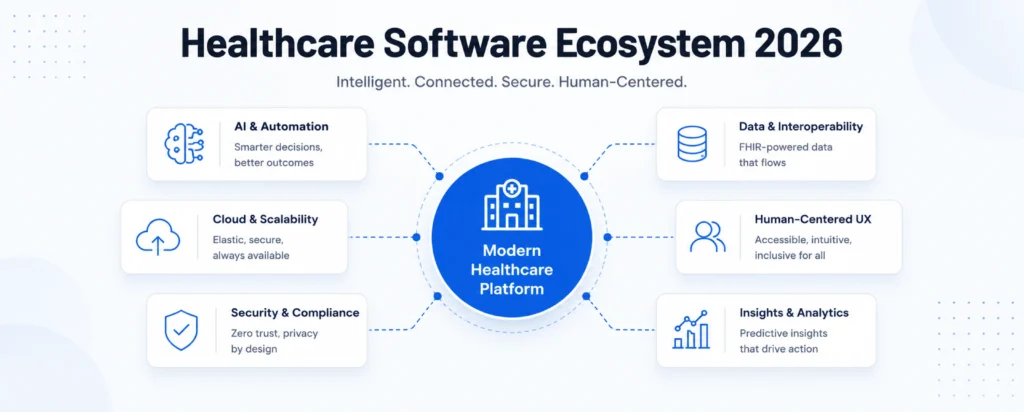
2026 marks the convergence point where AI maturity, cloud economics, and regulatory frameworks finally align. The wild west era of health tech ends. The age of predictable, scalable, evidence-based digital health begins. This guide dissects the ten trends that will separate healthcare software winners from those scrambling to catch up.
10 Healthcare Software Development Trends in 2026
Below are the healthcare software development trends you need to watch out for in the new year.
Trend #1 – Generative AI in Clinical Documentation and Decision Support
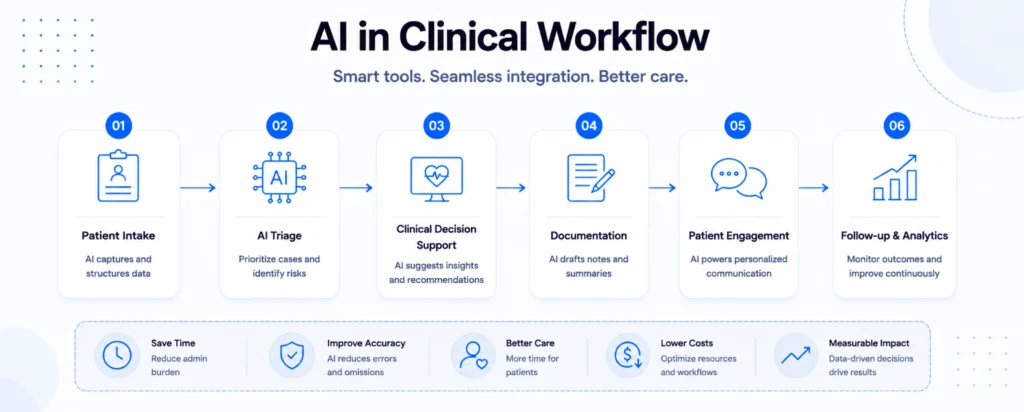
Large language models are eating medical documentation alive. Ambient scribes using GPT-4 variants and Med-PaLM capture patient conversations, generate SOAP notes, and populate EHRs while doctors maintain eye contact instead of typing. The time savings aren’t marginal – physicians report 40-60% reduction in charting time. That’s two hours daily returned to patient care.
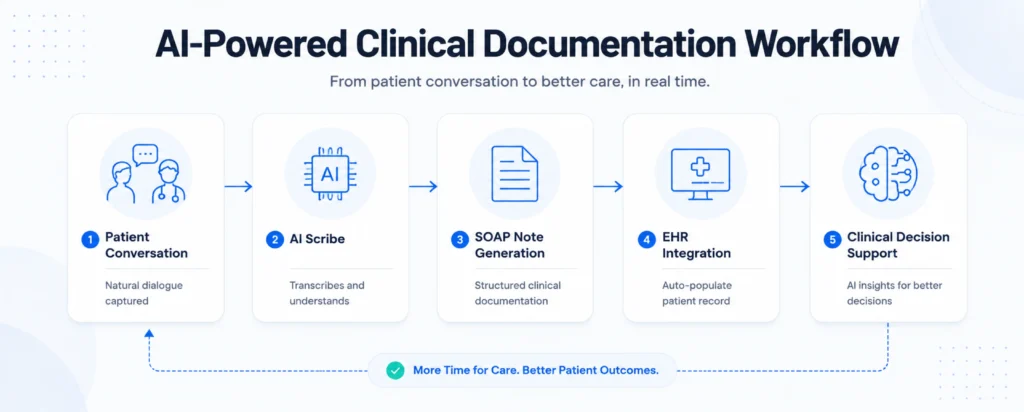
But the real revolution is decision support. LLMs trained on millions of cases suggest differential diagnoses doctors might miss. They synthesize treatment guidelines from thousands of sources instantly. They translate complex medical terminology into patient-friendly explanations that actually improve compliance. One oncology practice found their AI assistant caught medication interactions their exhausted physicians missed 15% of the time.
The risks keep compliance officers awake. Hallucination – where AI confidently states medical fiction – can kill patients. The FDA’s emerging AI framework requires continuous monitoring, version control, and kill switches when models drift. Organizations need governance structures determining when AI suggestions require human verification, how to document AI-influenced decisions, and who’s liable when algorithms recommend wrong treatments.
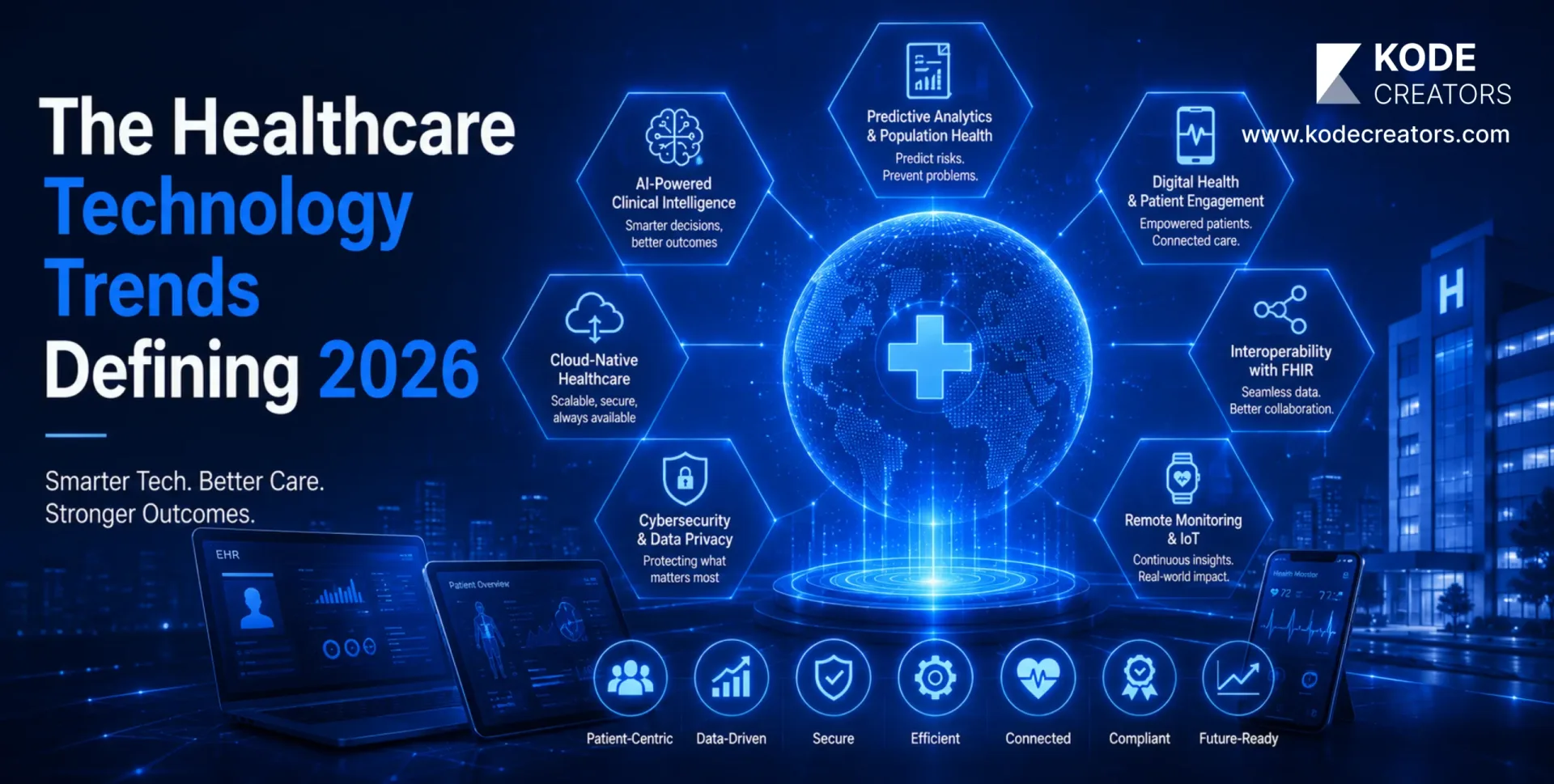
Trend #2 – Predictive Analytics Everywhere: From Population Health to Ops
Predictive analytics infiltrated every corner of healthcare operations. Readmission risk scores appear on discharge summaries. Staff scheduling algorithms predict call-outs three days early. Supply chain systems know you’ll need extra ventilators before respiratory season peaks.
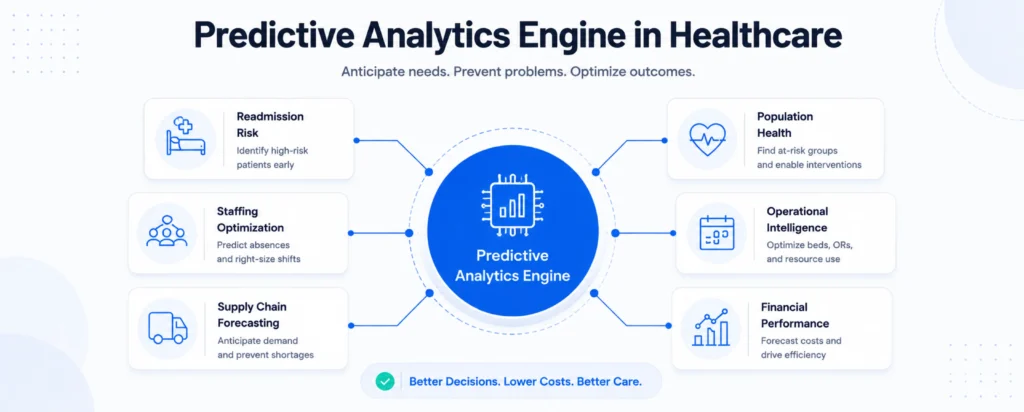
Population health management transformed from retrospective reports to proactive intervention. AI identifies pre-diabetics who’ll progress without intervention, flags depression risks from prescription patterns, predicts which patients will skip follow-ups based on social determinants. One Medicaid plan reduced ER visits 30% by predicting and addressing crises before they happened.
Predictive operations optimize everything. Bed utilization algorithms prevent the 3 PM scramble for discharges. Surgical scheduling AI minimizes OR downtime while accounting for surgeon preferences, equipment availability, and recovery bed capacity. Even parking systems predict demand, directing patients to available spots before frustration builds.
Trend #3 – Cloud-Native and Composable Architectures
Monolithic healthcare applications are decomposing faster than roadkill in August. Organizations realized that waiting eighteen months for vendors to add features kills competitiveness. Cloud-native microservices let hospitals swap components like Lego blocks – better scheduling from vendor A, superior billing from vendor B, custom workflows they built themselves.
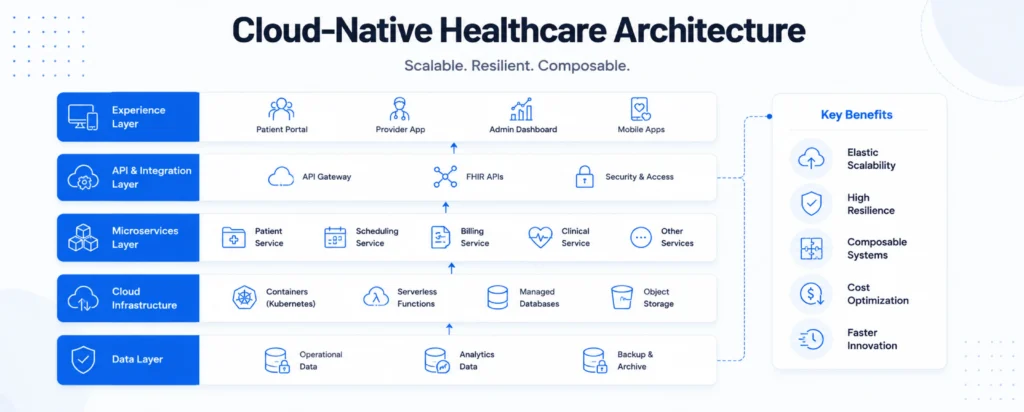
Serverless architectures eliminate infrastructure management overhead. Lambda functions handle appointment reminders. Kubernetes orchestrates complex medical imaging workflows. Healthcare organizations deploy updates daily instead of quarterly. Scalability becomes automatic – systems handle flu season surges without manual intervention.
Multi-cloud governance emerged from necessity. Hospitals can’t risk single vendor dependence, spreading workloads across AWS, Azure, and Google Cloud. Cloud interoperability standards ensure data flows seamlessly regardless of where applications run. Cost optimization algorithms automatically shift workloads to the cheapest suitable platform.
Trend #4 – FHIR R5 and Interoperability 2.0
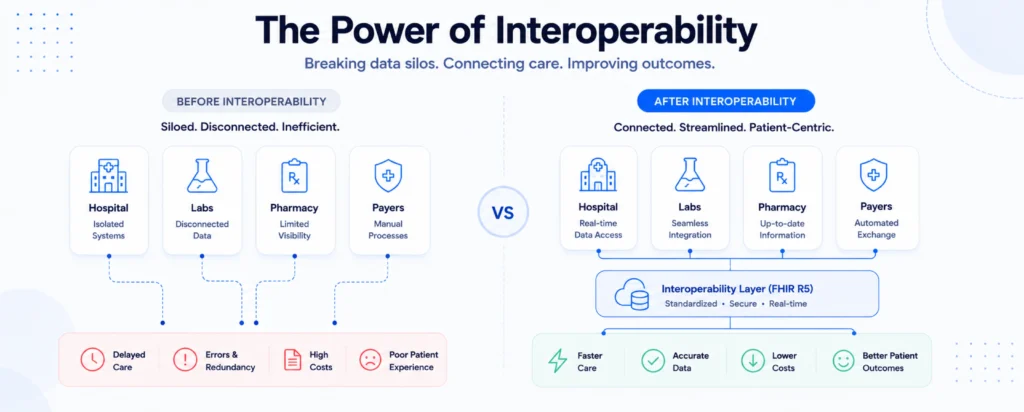
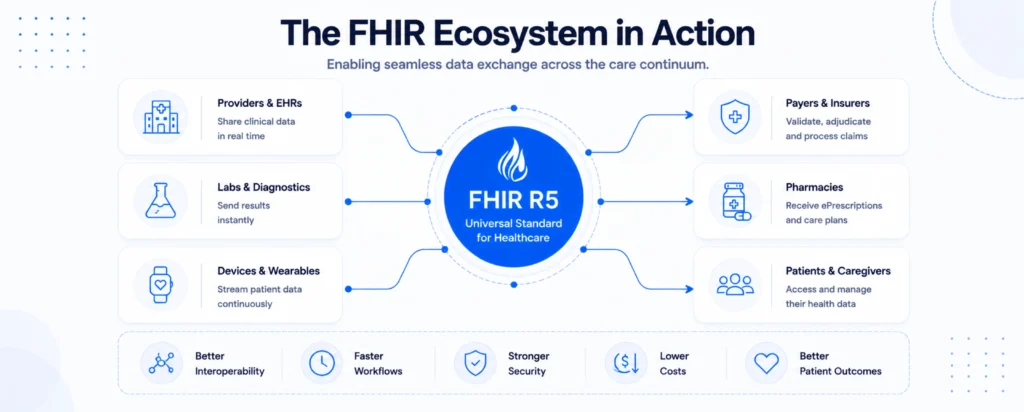
FHIR R5 marks the moment healthcare interoperability stopped being aspiration and became operational. The new specification handles complex scenarios R4 couldn’t – multi-organization care coordination, patient-generated health data, social determinant integration. Every major EHR vendor supports it because customers demand it.
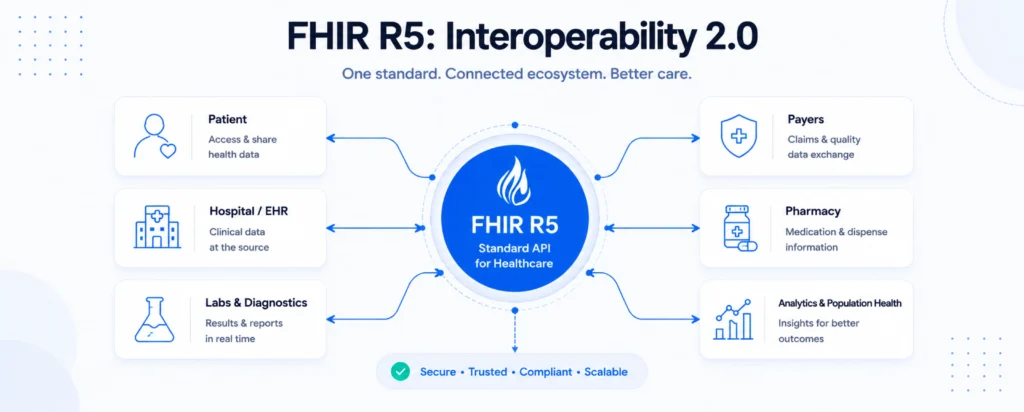
Value-based care analytics depend on these seamless data flows. Payers need clinical outcomes data to calculate quality scores. Providers need claims data to understand total cost of care. Both need social determinant data to identify intervention opportunities. FHIR R5 makes this tri-directional flow possible without custom interfaces.
Payer-provider ecosystems share AI dashboards showing real-time quality metrics, cost trajectories, and intervention opportunities. The adversarial relationship transforms into data-driven collaboration. One ACO reduced costs 20% while improving outcomes simply because everyone finally saw the same information.
Trend #5 – AI-Assisted DevOps (AI-Ops) in Healthcare Engineering
Machine learning infiltrated the software development lifecycle itself. AI reviews code for HIPAA violations before humans see it. Predictive models identify which deployments will fail based on commit patterns. Self-healing CI/CD pipelines automatically roll back problematic updates.
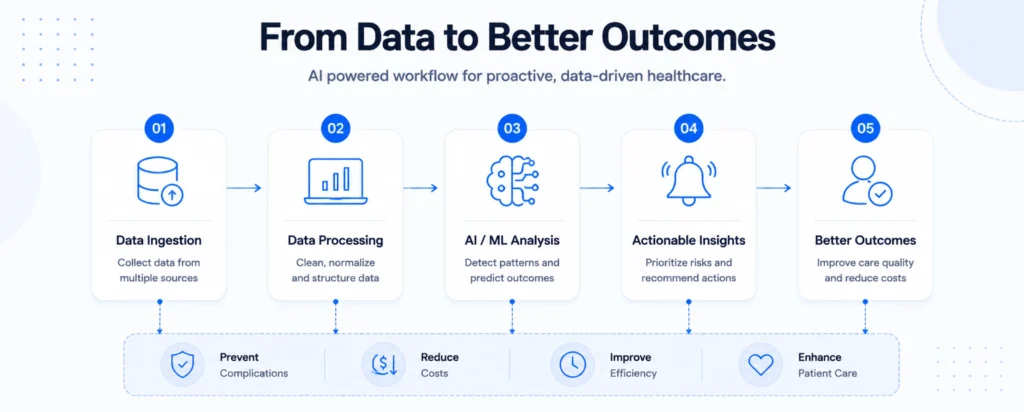
Testing transformed from scripted scenarios to AI-generated edge cases. The system creates test patients with condition combinations developers never imagined. It identifies UI patterns that confuse users before release. Security testing uses AI to find vulnerabilities human testers miss.
The efficiency impact is dramatic. Time to market drops 40%. DevSecOps costs decrease 30% through automation. Most importantly, production incidents plummet because AI catches problems during development, not after deployment.
Trend #6 – Advanced Cybersecurity and Zero-Trust Frameworks
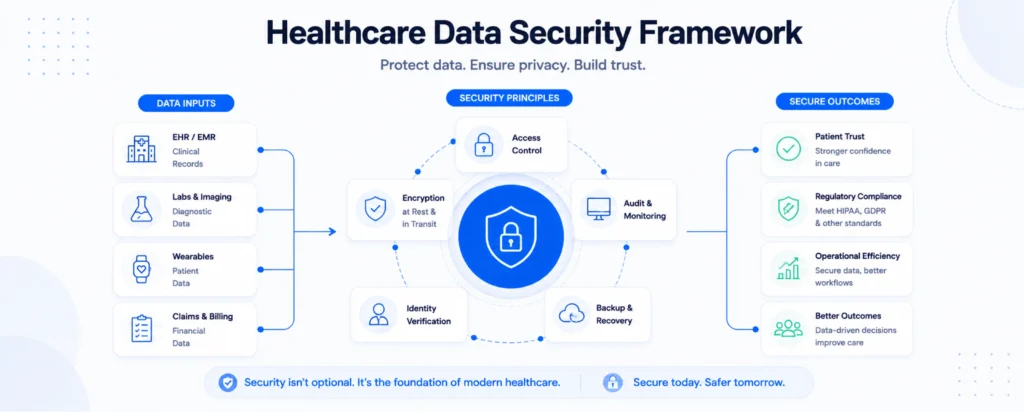
Ransomware attacks averaging $10 million in recovery costs taught healthcare a brutal lesson: perimeter defense doesn’t work. Zero-trust architecture – assuming breach and limiting blast radius – becomes mandatory by 2026. Every user, every session, every data request gets verified. Trust nothing, verify everything.
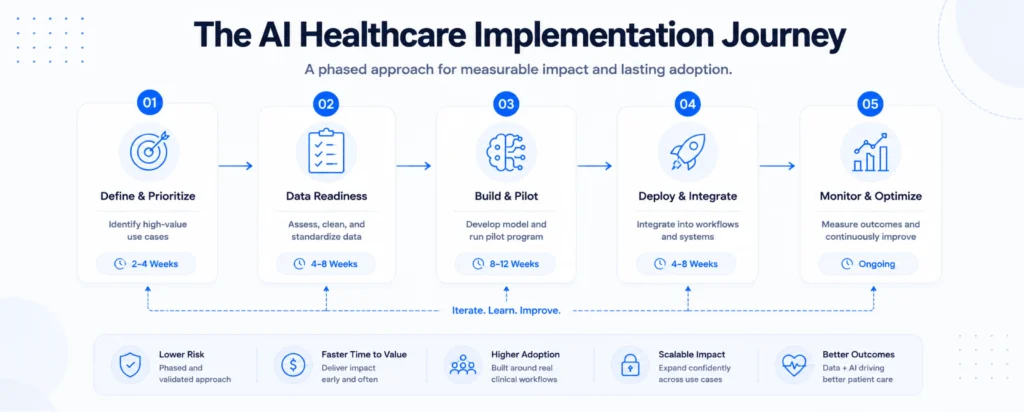
Multi-factor authentication evolves beyond passwords plus SMS. Biometric markers, behavioral patterns, and contextual signals determine access. AI-based threat detection identifies anomalies in milliseconds – unusual access patterns, suspicious data movements, potential insider threats. The system learns normal and flags abnormal before damage occurs.
HIPAA updates reflect new reality. Encryption at rest isn’t enough when AI can infer patterns from encrypted data. The 2025 updates require encryption in use, privacy-preserving analytics, and breach detection within hours, not days. ISO 27001:2025 alignment becomes table stakes for vendor selection.
Trend #7 – Low-Code / No-Code Healthcare Platforms
Hospitals tired of waiting for vendors started building their own solutions. Low-code platforms let clinicians create workflow apps by dragging boxes and drawing arrows. No-code tools enable form creation without HTML knowledge. The IT department guides rather than gatekeeps.
Governance keeps citizen developers from creating security nightmares. Platforms enforce HIPAA compliance automatically. API monitoring prevents data leaks. Security templates ensure proper authentication. The tools make it hard to build wrong, easy to build right.
Software vendors adapted by productizing configuration instead of selling custom code. Their platforms become canvases where customers paint their own workflows. The value shifts from features to flexibility. Winners provide guardrails, not gridlock.
Trend #8 – Human-Centered and Accessible UX for Diverse Patients
Mobile-first design for elderly users stopped being nice-to-have when 70% of Medicare beneficiaries owned smartphones. Interfaces that assume perfect vision, steady hands, and technical literacy exclude millions. WCAG 2.2 compliance becomes competitive differentiation, not compliance burden.
Inclusive UX drives measurable outcomes. Medication adherence apps with voice interaction see 40% better compliance from arthritis sufferers. Telehealth platforms with cognitive accessibility reduce drop-offs 50% for elderly users. The ROI appears in retention rates, health outcomes, and reduced support costs.
Design systems acknowledge diversity. Not everyone reads left-to-right. Color-coding fails for 8% of men. Gesture controls assume physical capabilities many lack. The winners build flexibility into foundations, not bolt accessibility onto finished products.
Trend #9 – Blockchain and Smart Contracts for Data Integrity and Supply Chains
Blockchain finally found healthcare problems worth solving. Clinical trial data becomes tamper-proof. Supply chains gain transparency from manufacturer to patient. Patient consent becomes cryptographically verifiable, not legally arguable.
Smart contracts automate complex agreements. Insurance payments trigger when treatment criteria are met. Research data sharing happens automatically when milestone conditions satisfy. Patient consent updates propagate across all holders instantly. The bureaucracy that delays healthcare dissolves into code.
Identity management through blockchain solves healthcare’s authentication nightmare. Patients control their identity across providers. Credentials verify without central authorities. The technology doesn’t replace existing systems – it creates trust layers making existing systems trustworthy.
Trend #10 – Digital Twins and Virtual Hospitals
Digital twins evolved from concept to operation. Entire hospitals exist as simulations, testing operational changes before implementation. Patient-specific models predict treatment responses before administration. The physical and digital converge into comprehensive care systems.
IoMT sensors feed continuous data to digital models. Bed occupancy, equipment utilization, staff movement patterns update in real-time. AI simulations test scenarios: what if flu season arrives early? What if the MRI breaks during peak demand? Virtual hospitals reveal optimal responses before crises hit.
Remote rehabilitation uses digital twins to personalize recovery. The virtual patient performs exercises, predicting real patient outcomes. Adjustments happen proactively based on simulation results. Recovery accelerates because treatment optimizes continuously, not periodically.
Cross-Trend Summary: What This Means for Healthcare Software Companies
Success in 2026 requires integration, not isolation. AI capabilities mean nothing without compliance frameworks. Beautiful UX fails without API connectivity. Security without usability gets disabled. The winners weave all trends into cohesive platforms.
Speed comes from leveraging existing infrastructure. Cloud partnerships provide scale. API standards enable integration. Open-source components accelerate development. Building everything from scratch guarantees competitive irrelevance.
Data ethics becomes market differentiation. Organizations that transparently handle data, clearly explain AI decisions, and respect patient autonomy build trust. Those treating healthcare data as commodity to exploit face backlash, regulation, and bankruptcy.
Key Takeaways
Software winners in 2026 combine three elements rivals struggle to balance: predictive intelligence that anticipates needs, security that protects without interfering, and human empathy embedded in every interaction. Technology alone doesn’t win – trusted technology that improves outcomes wins.
Collaboration around standards matters more than proprietary advantages. Hospitals and vendors fighting over data ownership both lose to ecosystems that share value. FHIR APIs, cloud portability, and open AI models create rising tides lifting all participants.
The adoption barriers shifted from technical to trust. Healthcare organizations don’t doubt technology capabilities – they doubt vendor motivations. Building transparency into features, making ethics visible in design, and proving outcomes through evidence converts skeptics into advocates. The future belongs to those who build trust as carefully as they build code
Related Blogs
We analyse the mobile app industry and provide executive
summaries on
trends, mistakes, projections, and data.